
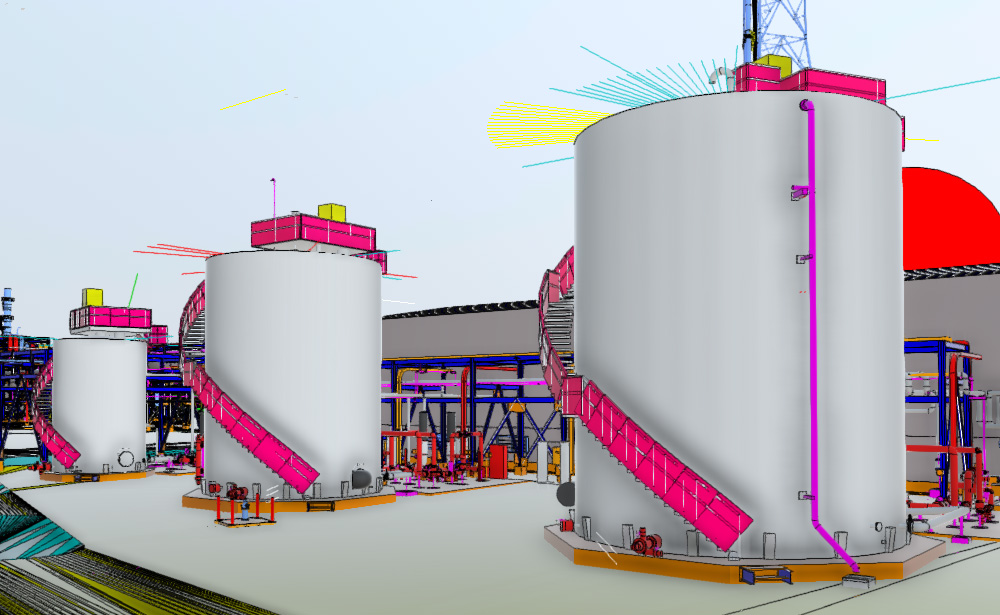
Point Cloud to BIM Conversion (LOD 100–500)
Point Cloud to BIM Conversion (LOD 100–500): We transform raw 3D laser scan data into intelligent, fully parametric Revit and ArchiCAD models at any Level of Development — from conceptual massing (LOD 100) through fabrication-ready detail (LOD 500). Our rigorous QA process ensures dimensional accuracy, element classification, and compliance with client BIM Execution Plans (BEPs).
Why Work With Us
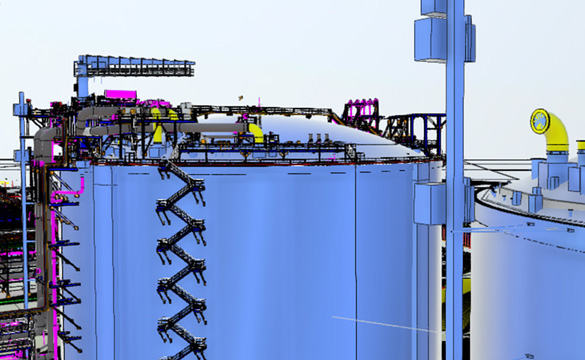
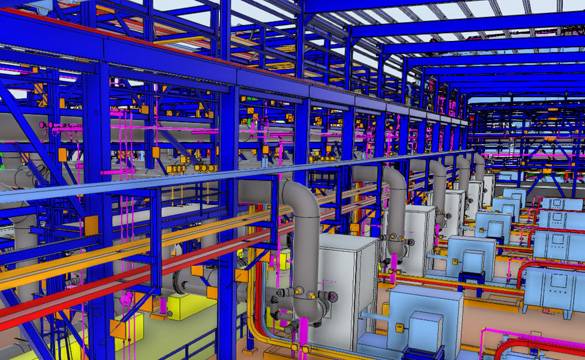
We combine field-proven point cloud expertise with disciplined BIM authoring practices to deliver models and drawings that are accurate, coordinated, and immediately usable. Our team operates across time zones, maintains fast turnaround cycles, and scales to project demands — from single-building surveys to multi-site portfolio programmes.
Frequently asked questions
We import raw scan data (RCS/RCP, E57, etc.) into Revit and use it as a precise 3D reference. Our team then models architectural, structural, or MEP elements directly over the point cloud to ensure the digital model perfectly mirrors the as-built conditions.
We offer a full range of Revit modeling detail:
- LOD 100 (Conceptual): Overall massing and spatial orientation.
- LOD 200 (Approximate Geometry): General systems with approximate quantities, size, and shape.
- LOD 300/350 (Precise Geometry): Detailed as-built modeling including specific assemblies and connections.
- LOD 400 (Fabrication): Highly detailed elements suitable for fabrication and assembly.
- LOD 500 (As-Built/Facility Management): Verified field conditions for long-term maintenance and operations.
We can work with your firm’s specific Revit templates and custom family libraries to ensure the final model integrates seamlessly into your existing ecosystem. If you don’t have a template, we use industry-standard BIM templates.
While Revit works best with .RCP and .RCS files, we can also process and convert .E57, .LAS, .PTS, and .XYZ formats before beginning the modeling process.
We utilize a “zero-tolerance” approach where possible. Our modelers verify the Revit elements against the scan slices at multiple elevations and sections. We also provide a deviation report if requested, highlighting any discrepancies between the scan and the modeled geometry.
Yes. Historic or older buildings often have shifted foundations or slanted walls. Unlike standard drafting, we can model these “as-is” in Revit to ensure the model reflects the actual site irregularities rather than an idealized version.