
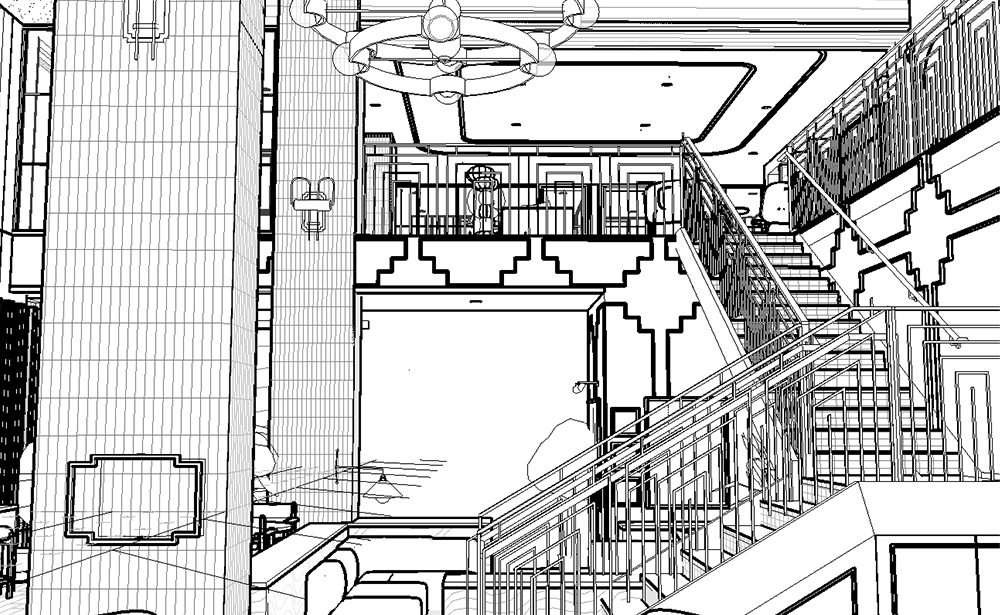
In construction and architecture, what is designed on paper rarely matches the final built condition exactly. Field adjustments, design changes, unforeseen site conditions, and contractor modifications all contribute to deviations from original plans. This is where As-Built Drawing Services become essential.
As-built drawings provide a precise record of what was actually constructed, forming a critical foundation for facility management, renovation, legal documentation, and future design work.
What Are As-Built Drawings?
As-built drawings are updated versions of original construction drawings that reflect all changes made during the construction process. They document the exact dimensions, materials, layouts, and systems as they exist in the completed structure.
These drawings typically include updates to:
- Architectural layouts (walls, doors, windows)
- Structural modifications (beams, columns, slabs)
- Mechanical, Electrical, and Plumbing (MEP) systems
- Site conditions and utilities
- Equipment placement and installations
They are often created after construction completion, but in many modern workflows, they are updated progressively during construction using digital tools.
What Are As-Built Drawing Services?
As-built drawing services refer to the professional process of collecting, verifying, and converting field data into accurate construction documentation.
These services are usually provided by CAD technicians, BIM specialists, or surveying professionals who use tools such as:
- Laser scanning (LiDAR)
- Total stations
- Drones (for large sites)
- Manual site measurements
- Point cloud data processing
- BIM modeling software (Revit, AutoCAD, ArchiCAD)
The final output is a set of updated 2D drawings or 3D BIM models that reflect real-world conditions.
Why As-Built Drawings Are Important
1. Accurate Facility Management
Building owners rely on as-built documentation to understand the exact location of systems like electrical wiring, HVAC ducts, and plumbing lines. This reduces maintenance time and avoids costly errors.
2. Renovation and Retrofit Projects
Before modifying a building, architects and engineers need accurate existing-condition drawings. As-built documentation ensures safe and efficient redesign work.
3. Legal and Compliance Requirements
Many jurisdictions require updated drawings for regulatory approval, occupancy certificates, and dispute resolution.
4. Risk Reduction
Accurate documentation helps prevent construction conflicts, utility damage, and design errors during future work.
5. Asset Lifecycle Management
For large infrastructure and commercial buildings, as-built drawings support long-term asset tracking and management.
Process of As-Built Drawing Services
The workflow typically follows these stages:
1. Site Survey and Data Collection
Professionals visit the site and gather real-world data using measurement tools or scanning technologies.
2. Point Cloud Generation (if scanning is used)
Laser scanning produces millions of data points representing the building geometry, known as a point cloud.
3. Data Processing and Verification
The collected data is cleaned, aligned, and checked for accuracy against design intent or previous drawings.
4. CAD/BIM Modeling
Technicians convert field data into structured CAD drawings or BIM models using software like AutoCAD or Revit.
5. Quality Control
Final drawings are reviewed to ensure dimensional accuracy and compliance with project requirements.
6. Delivery of Final Documentation
Clients receive updated 2D drawings, 3D models, or both, depending on project needs.
As-Built Drawings vs. Design Drawings
| Feature | Design Drawings | As-Built Drawings |
|---|---|---|
| Purpose | Proposed design | Actual construction |
| Accuracy | Theoretical | Field-verified |
| Updates | Before construction | During/after construction |
| Usage | Planning & approval | Maintenance & renovation |
Understanding this difference is critical for avoiding costly misinterpretations during future work.
Industries That Rely on As-Built Drawing Services
- Architecture and construction
- Civil engineering infrastructure projects
- Industrial plants and factories
- Oil and gas facilities
- Commercial real estate
- Healthcare and educational buildings
Each of these sectors depends on precise documentation to ensure safety, compliance, and operational efficiency.
Benefits of Professional As-Built Drawing Services
Hiring specialized service providers offers several advantages:
- Higher accuracy through advanced scanning and modeling tools
- Faster turnaround compared to manual drafting
- Reduced risk of construction disputes
- Integration with BIM workflows for digital twins
- Scalable solutions for small buildings to large infrastructure projects
The Future: As-Built Documentation and BIM Integration
Modern construction is rapidly moving toward BIM-based as-built modeling. Instead of static drawings, organizations are adopting intelligent 3D models that store metadata about every building component.
This evolution supports:
- Smart facility management
- Predictive maintenance
- Digital twin development
- Cloud-based collaboration
As technology advances, as-built drawing services are becoming a core component of digital construction ecosystems.
Conclusion
As-built drawing services are no longer optional—they are a critical part of modern construction and infrastructure management. They bridge the gap between design intent and real-world execution, ensuring that buildings can be safely maintained, upgraded, and understood throughout their lifecycle.