
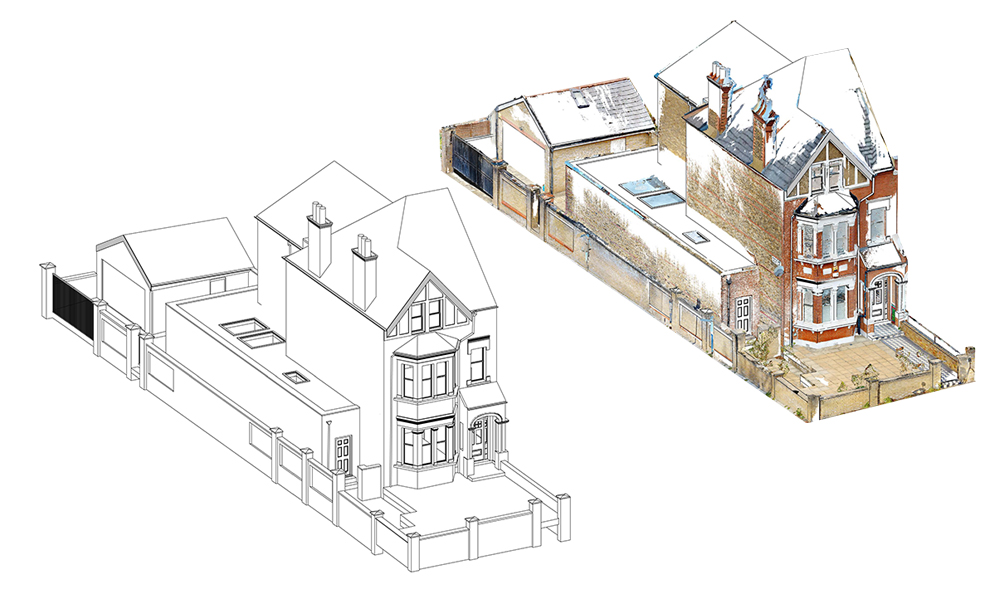
In today’s Architecture, Engineering, and Construction (AEC) industry, digital workflows have become essential for delivering accurate, efficient, and cost-effective projects. Among these workflows, Revit Modeling Services play a central role in Building Information Modeling (BIM), enabling professionals to create intelligent 3D models that integrate geometry with real-world data.
This article explains what Revit modeling services are, how they work, their benefits, and why they are increasingly essential for modern construction and design projects.
What Are Revit Modeling Services?
Revit Modeling Services refer to the process of creating detailed, data-rich 3D building models using Autodesk Revit. These models are not just visual representations; they contain structured information about building elements such as walls, doors, windows, structural components, MEP systems, and more.
Service providers typically use Revit to convert:
- 2D CAD drawings into 3D BIM models
- Point cloud data (from laser scanning) into as-built models
- Concept designs into detailed construction-ready models
- Architectural sketches into coordinated BIM environments
The output is a parametric BIM model that can be used across the entire project lifecycle.
Key Types of Revit Modeling Services
1. Architectural Modeling
Focuses on building design elements such as walls, floors, roofs, doors, windows, and finishes. It ensures visual accuracy and design coordination.
2. Structural Modeling
Includes beams, columns, foundations, and reinforcement detailing. It helps engineers analyze load distribution and structural performance.
3. MEP Modeling
Covers Mechanical, Electrical, and Plumbing systems. This ensures clash-free coordination between building services.
4. Scan to BIM Services
Transforms laser-scanned point cloud data into accurate Revit models, commonly used for renovation and retrofit projects.
5. As-Built Modeling
Represents the exact existing condition of a building, often used for facility management and renovation planning.
How Revit Modeling Services Work
The typical workflow includes:
- Data Collection
Inputs include CAD files, sketches, PDFs, or point cloud scans. - Project Setup in Revit
Templates, levels, grids, and standards are established. - Model Creation
Architectural, structural, and MEP elements are modeled in 3D. - Coordination & Clash Detection
Different disciplines are coordinated to avoid design conflicts. - Quality Assurance
Models are checked for accuracy, standards compliance, and completeness. - Final Delivery
The BIM model is delivered in Revit format (.RVT) or exported formats like IFC.
Benefits of Revit Modeling Services
Improved Accuracy
Revit’s parametric environment ensures that all model elements are interconnected, reducing human error.
Enhanced Collaboration
Multiple disciplines can work on a shared BIM model, improving coordination between architects, engineers, and contractors.
Time and Cost Efficiency
Early detection of design issues reduces rework, saving both time and construction costs.
Better Visualization
Stakeholders can visualize the project in 3D, improving decision-making and communication.
Lifecycle Management
The model can be used beyond construction for facility management and maintenance.
Industries That Use Revit Modeling Services
- Architecture firms
- Construction companies
- Engineering consultancies
- Real estate developers
- Facility management companies
- Infrastructure and industrial projects
Why Outsource Revit Modeling Services?
Outsourcing BIM modeling has become a common strategy due to its practical advantages:
- Access to skilled BIM professionals
- Reduced operational costs
- Faster project turnaround
- Scalability for large or multiple projects
- Focus on core design and engineering tasks
Outsourcing also ensures compliance with international BIM standards without needing to maintain a large in-house team.
Future of Revit Modeling in BIM
The future of Revit modeling is closely tied to advancements in:
- Cloud-based BIM collaboration
- AI-assisted modeling and automation
- Digital twins for smart building management
- Integration with GIS and real-time data systems
As construction becomes more data-driven, Revit modeling will continue to evolve from a design tool into a full lifecycle management platform.
Conclusion
Revit Modeling Services have become a cornerstone of modern BIM workflows, offering precision, efficiency, and collaboration across all stages of construction projects. Whether for new builds, renovations, or infrastructure development, Revit-based BIM modeling ensures better design coordination and smarter project execution.